Mostrando entradas con la etiqueta In English. Mostrar todas las entradas

martes, 27 de noviembre de 2012

Girafa de Gen Hagiwara

Gen Hagiwara es el maestro de lo simple. Cualquiera de sus modelos parte de una estructura básica y sencilla, y el resto de la secuencia es puro modelado para sacar los detalles. Los diagramas de esta girafa tienen 120 pasos pero en los 30 primeros ya se distinguen perfectamente las partes que tendrá el modelo final.
La cabeza es muy interesante porque se consigue con simples pliegues revertidos pero es muy expresiva, con sus orejas y cuernos. La zona del pecho está muy bien resuelta, sin embargo las patas delanteras son más finas que las traseras, dado que provienen de las esquinas del cuadrado, y el modelo tiende a abrirse por ahi.
Está doblada con un cuadrado de 35 cm de papel lokta con metil. Los diagramas salen en el libro de la convención Tanteidan 2012.

Gen Hagiwara is a master of simplicity. Any of his models start form a basic and simple structure, and the rest of the sequence is pure modelling for getting the details. The diagrams of this giraffe have 120 steps but in the first 30 tha parts of the finished model are already visible.
The head is very interesting because it's formed with just reverse folds but it is very expressive, with his horns and ears. The chest is very well done, however the front legs are weaker than the rear legs, given that they come form the corners of the square, and the model tends to open there.
It's folded from a square of 35 cm of lokta paper with MC. Diagrams appear in the book of the Tanteidan convention 2012.

jueves, 21 de junio de 2012

Blue Jay de Quentin Trollip

Lo primero al diseñar un modelo es situar mentalmente las puntas que este va a tener sobre el papel, es decir: decidir que zonas del cuadrado van a servir para cada una de las partes del modelo. En los pájaros normalmente se utiliza el centro para el pico y se dejan los bordes para las patas y las alas; pero en este caso tenemos otra distribución: como las alas y el pico necesitan un cambio de color (que solo puede ser realizado en el borde del papel), las patas pasan a salir desde el medio. Para ello utiliza un injerto a lo largo de toda la diagonal, que también proporciona papel de sobra para detallar la cabeza y la cola. De esta forma Trollip consigue que su pájaro tenga las alas y el pecho de dos colores diferenciados, como es habitual en esta especie (en castellano sería un arrendajo).
Esta figura la enseñó Trollip en Bilbao, donde se celebró este año la Convención Anual de la AEP y a la que él estaba invitado. La doblé con un cuadrado de 30x30 cm de unryu que me regaló Luis Matías (un grandísimo plegador de Madrid), al que le pegué por la otra cara un seda blanco.
Recomiendo un vistazo al Flickr de este creador porque podréis observar otros pájaros que tiene creados con la misma base que este, entre otras excelentes figuras.

First thing to do when designing a model is to locate the points that it is going to have in the paper, this is to decide which areas on the square are going to be used for every part of the model. Generally, in birds the center of the sheet is for the beak and the borders for the feet and wings; here we have other distribution: because wings and beak need a colour change (that only can be done on the border of the square), feet come now from the center. For this a diagonal graft is used, taht also gets more paper for making details on the head and the tail. In this way Trollip gets his bird with two colours on wings and chest, as usual on this species.
This figure was thaught by Trollip in Bilbao, where the annual convention of the AEP was celebrated this year and where he was invited. I folded it with a 30 cm square of unryu paper, gift of Luis Matías (a great folder from Madrid); glued onto a sheet of white tissue paper.
I highly recommend having a look at the Flickr gallery of this designer because you can watch other birds that he has created with the same base as this, allong with other excellent models.

jueves, 10 de mayo de 2012

Grim Reaper de Miyamoto Chuya

Durante estos años y debido al espectacular desarrollo del origami, se generalizaron las figuras complejas en las que antes de "plegar" el modelo propiamente dicho en sus diagramas se incluían muchos pasos de premarcado, es decir, pliegues que se marcan en el papel y que a lo largo de la secuencia sirven para facilitar el colapsado. Pues bien, lo más especial de este modelo es que tiene 258 pasos y ni uno sólo de premarcado: empieza directamente desde una base bomba. Aún así, es muy complejo y asimétrico: de un lado del papel sale la guadaña, mientras que el brazo, la cabeza y el manto del otro. La calavera es un tanto difícil de modelar, sobre todo los dientes que se forman a base de unos pequeños crimps. En resumen, es una figura muy interesante y divertida de plegar.
Lo doblé hace un par de semanas para la convención internacional de la AEP en Bilbao, por eso no he tenido tiempo de fotografiarla. Utilicé un papel doble seda de 70 cm, y los diagramas están publicados en la edición especial de la JOAS 2012.

During the past years and due to the espectacular development of origami, complex figures generalized in wich, before to "fold" the model the model itself, the diagrams included lots of steps of precreasing, this is, folds that are made on the paper and that help to make the collapsing. So, the most special aabout this one is that it has 258 steps and not a single one of precreasing: it starts directly from a waterbomb base. Even, it is complex and assymetric: from one side of the paper comes the scythe and from the other the arm, hand and cloak. The skull is a bit tricky to shape, specially the teeth that are made with small crimps. In conclusion, it's a very interesting figure and amusing to fold.
I folded it a couple of weeks ago for the convention of the AEP in Bilbao, that's why I hadn't had time to take a pic. I used a double tissue paper of 70 cm, and the diagrams are published in the special edition of the JOAS 2012.

jueves, 9 de febrero de 2012

Yakushiji Tenzen de Hoang Trung Thanh


Más del "50 hours of origami +". Ahora el modelo estrella del libro. Muy interesante tanto en la estructura como en el modelado.
Está basado en una estructura típica de boxpleating (si, sé que ultimamente pliego muchos BP :) ), con algunos ángulos de 22,5 para formar la cabeza y la zona de los pies, así consigue que las botas queden más anchas arriba que abajo y le da una imagen muy original. Los brazos son harto difíciles de modelar porque la zona del pecho está muy sobrecargada de capas (todas las que se usan para los dedos); donde faltan es en las piernas, y le es dificil quedarse de pie. Para formar la cara hay que modelar el pelo hacia los lados para que quede al descubierto.
La secuencia es bastante divertida; la parte más aburrida aparte del preplegado es en mi opinión la formación de la cabeza, principalmente por las susodichas capas que dificultan el trabajo. Usé un papel triple seda de 45 cm de lado: gris y azul más uno blanco en el medio para darle consistencia. Y los retoques con MC.

More from "50 hours of origami +". Now the star of the book. Very interesting both the structure and shaping.
It is based on a tipical boxpleating structure (yes, I know, I have folded lots of BP's recently :) ), with a few 22,5 angles to form the head and the feet, so he gets that the boots lay wider up than down and gives a really nice effect. Arms are really hard to shape because the chest area gets a lot of layers together (all needed for the fingers); where they miss is at the legs, and he difficult stands up. To make the face you have to fold the hair to the side so it can be seen.
The sequence is fun; the most boring part apart from the precreasing is in my opinion the collapsing of the head, because of the mentioned layers that makes difficult to work there. I used a triple tissue paper of 45 cm a side: grey and blue with a white sheet in the middle for giving consistence. And final touches with MC.

martes, 3 de enero de 2012

Pegaso de Fumiaki Kawahata

Este pegaso es una versión desarrollada a partir de la base de otro del mismo autor, y que fue publicado en una revista Tanteidan. Se basa en un box pleating sencillo de 10x10, por lo que reduce bastante el tamaño del papel y hay que adelgazar mucho las capas para "acomodar" el modelo a su forma final, y las patas delanteras son muy gruesas.
En mi opinión las alas son un poco pequeñas: la versión nombrada más arriba las tiene más grandes y luce más, pero sin embargo lo que es la forma del caballo está muy bien lograda y la cabeza me gusta mucho.
Lo plegué con un papel doble seda (Canson+natural) de 40 cm de lado, a partir de los diagramas que aparecen en el libro Origami Fantasy de Fumiaki Kawahata, en el que se incluyen también sus magnificos diseños de dinosaurios.

This pegasus is a more developed version from the base of another by the same designer, and that was published in a Tanteidan magazine. It is based on a simple 10x10 box pleating, so it reduces quite a lot the size of the sheet and we must narrow the layers to "adapt" the model to his final form, and the front legs are very thick.
In my opinion the wings are a bit small: the version that I told before has bigger ones and looks fairly better, but the form of the horse in this is very well proportioned and I like it so much.
I folded it with double tissue paper (Canson+natural), 40 cm the side, from the diagrams that appear in the book Origami Fantasy by Fumiaki Kawahata, in which are included his magnific dinosaurs designs.

sábado, 5 de noviembre de 2011

Blakiston Fish Owl, otra vez.

Estaba poco satisfecho con el primer intento, así que decidí darle una segunda oportunidad con papel más grande y más gordo para facilitar el modelado: de haber usado un doble seda de 35 cm pasé a un triple seda de 45 cm, siendo una de las hojas de papel arroz, lo que le da una textura genial; es el tamaño perfecto para trabajar pues el modelo final queda con unas dimensiones más que aceptables (27 cm de envergadura). Conseguí esta vez plegar las alas correctamente, siguiendo el diagrama de la versión más sencilla publicado en el libro Tanteidan Convention 17; y darle más redondez a la cara. También plegué esta vez el pecho con más plumas, inspirado en esta foto.
Por supuesto, el colapsado es desde el CP. Muestro aquí debajo una secuencia del plegado.
Modelo de Katsuta Kyohei.

A bit unsatisfacted with the first attempt, I decided to go back and have another try at it, this time with bigger and thicker paper, for allowing better shaping: from having used a double tissue paper of 35 cm long to a triple tissue paper of 45 cm, being one of the sheets rice paper, which has a great textures; this is the perfect size to work with, final models cames off with 27 cm wingspan length. I could this time fold the wings correctly, following the diagram of the simpler version that is published on the Tanteidan Convention book 17; and shaped the face more round. I also folded the chest with more feathers, inspired by this photo.
Of course, collapsed from CP. I share down here a folding sequence.
Model by Katsuta Kyohei.

jueves, 15 de septiembre de 2011

Conejo de Hagiwara Gen

Este conejo aparece publicado en el nuevo libro de la convención Tanteidan 17. Este autor, japonés aunque vive en Australia (http://www.flickr.com/photos/gen_hagiwara/), suele crear modelos sencillos y con pocos detalles pero muy expresivos.
La disposición interna consta de varias estructuras tradicionales, una base pájaro estirada y medias bases pez.
El modelo tiene cambio de color en los ojos y un volumen en la parte trasera muy adecuado. Lo único malo de este diseño es que posee lomo abierto.
El proceso de plegado es fácil de seguir y muy ameno, con muy poco premarcado inicial.
Está plegado desde el diagrama con papel kraft rojo, pintado de blanco en una cara, de 24 cm de lado.

This rabbit is published in the new book of the Tanteidan convention 17. This designer, japanese but living in Australia (http://www.flickr.com/photos/gen_hagiwara/), uses to create simple models and with very few details but very expressive.
The internal structure is based on traditional bases, as an streched birdbase and half fishbases.
The model has colour change in the eyes and volume in the rear part. The bad thing about this design is that it has open back.
The folding sequence is simple to follow and fun, with very less precreasing.
It was folded from diagram with red kraft paper, painted white on one side, size 24 cm.

jueves, 11 de agosto de 2011

Dragon de Brian Chan

 A veces un modelo requiere algo más que un box-pleating normalito. Como en este curioso dragón asimétrico. Dos bases pájaro estiradas proporcionan al conjunto una longitud considerable y extremidades cortas. El resto de detalles (cabeza, cola y dedos) surgen de dos injertos en los bordes superior e inferior del papel -1/4 del total-
La asimetría de la figura lleva a que dos de las patas sean más gruesas que las otras dos, con el doble de capas. A mayores, la distribución de puntas en la cabeza es un poco liosa: yo solo consegui sacar tres a cada lado; Brian utiliza una más para la mandíbula (original)
Está plegado con papel kraft finito de 24 cm: el modelo no reduce mucho por lo que se puede plegar con papeles pequeños.
Fue expuesto por primera vez en la convención del CDO 2010.

Sometimes one model needs something more than a normal box-pleating. Like this curious assimetric dragon. Two stretched bird bases give the figure to be long and have short legs. The rest of the details (head, tail and fingers) come off two border grafts up and down the paper - 1/4 of the total square-
The assimetry of the model makes two of the legs to be thicker than the other two, with double of layers. And more, distribution of points in the head is quite tricky: I have only managed to use three on each side; Brian uses one more for the lower jaw (original)
Folded from a 24 cm square of thin kraft paper: the ratio of the model isn't very high so it can be done with small paper.
It was exhibited by the first time at the CDO 2010 convention.

Waterdragon - Brian Chan


lunes, 4 de julio de 2011

Southern Pudu de Quentin Trollip

Otro genial modelo de Quentin. El pudu es un pequeño ciervo originario de Ámerica del Sur, que mide entre 60 y 90 cm de largo; el cual ha representado a la perfección con unos cambios de color bien característicos en la barriga y boca. La alternancia de capas de distinto color en el interior del modelo hace esto relativamente fácil de ejecutar: un pliegue montaña sirve para dejarlas a la vista.
El modelo no aprovecha bien el papel, quedando las patas delanteras muy finas y las traseras muy gordas (en cuanto a capas). Sin embargo, el modelo fianl merece, y con un poco de MC se arregla sin problema. La estructura, típica de otros modelos de Quentin.
Plegado con un papel mulberry pegado a un seda, 30 cm de lado. Diagramas en el nº 6 de la Revista 4 Esquinas, que contiene también otros para un mágnifico león de Nicolás Gajardo.

Another awesome model by Quentin. The pudu is a small deer from South America, that measures between 60 and 90 cm long; it's really well represented with characteristic colour changes on belly and mouth. Alternancy of layers inside the model makes this quite easy: a mountain fold is used to leave them at sight.
The model doesn't make a good use of paper: front legs are so thin, instead of back ones, that become too thick. Already, final result is great, and with a bit of MC there's no problem left. The structure, typical of Quentin's.
Folded with mulberry paper mc'ed onto tissue, 30 cm long. Diagrams on nº 6 of magazine 4 Esquinas, where also are others for a amazing lion by Nicolás Gajardo.

viernes, 8 de abril de 2011

Blakiston Fish Owl de Katsuta Kyohei

En la JOAS (Japanese Origami Academic Society), una especie de "meca" del origami, cada año aparecen nuevas promesas, creadores novatos que se dan a conocer con sus primeras figuras. Katsuta Kyohei fue uno de esos, y ahora crea modelos de gran complejidad.
Este buho es una versión más desarrollada de otro más sencillo que aparece en la Tanteidan Magazine 101.
Personalmente es uno de mis modelos favoritos: el CP está basado en una rejilla de 24 y es relativamente fácil de colapsar, aunque el posterior plegado de las alas requiere cierta práctica. Lo plegaré otra vez ya que no he quedado contento con esa parte. Utilicé un papel doble seda de 35 cm y acabados en MC.

At JOAS (Japanese Origami Academic Society), a kind of mecca of origami, each year some new promising artists come out, new creators who start to be known among folders. Katsuta Kyohei has been one of these, and now he's creating high-complexity models.
This owl is a more developed version of a simpler design that was published in Tanteidan Magazine 101.
Personally is one of my faves: the CP is based on a 24 grid and it's quite simple to collapse, but then folding the wings is quite tricky. I'll fold it again because I didn't attempted this part well. I have used a double tissue sheet, 35 cm, endings with MC.

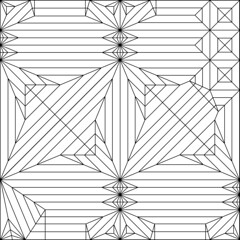
El CP del modelo fue mostrado en una de las últimas convenciones de OrigamiUSA, aquí está:
The CP was shown at one of the latest OrigamiUSA conventions, here it is:
Blakiston Fish Owl - Katsuta Kyohei (CP)

miércoles, 9 de febrero de 2011

Tiburón blanco de Quentin Trollip

Great White Shark by Quentin Trollip
De actualidad gracias a su recién publicado libro "Origami Sequence", en el que se incluye el diagrama para este bonito modelo. La base del modelo permite obtener gran variedad de animales, y el detalle de los dientes, que se forman con un hundido abierto en la punta más gorda, le dan el toque distintivo al modelo. Plegado con un papel doble seda de 35 cm y acabado en MC.

Currently famous thanks to his published new book "Origami Sequence", which the diagram to this model belongs to. The base lets to obtain a huge variety of animals, and the detail of teeth, formed out of a thick point that was open-sinked, give a dstinctive touch to this model. Folded out from a sheet of double tissue paper, 35 cm, final shaping with MC.


sábado, 18 de diciembre de 2010

Saltamontes de Brian Chan


Brian Chan está a punto de sacar nuevo libro. Works of Brian Chan saldrá a finales de año editado por Origamihouse. Pero para ir haciéndose una idea el autor ya ha ido dejando algunos diagramas mundo adelante: el cangrejo violinista (Tanteidan), el escarabajo hércules (OrigamiCusco), y este saltamontes en la convención del CDO. Es la versión más sencilla de una serie que incluye el saltamontes caminando y otro volando, que yo espero que diagrame. Mientras tanto, la secuencia para este está aquí. Plegado con papel doble seda de 35 cm.

Brian Chan is nearly getting out his new book. Works of Brian Chan will be published at the end of the year by Origamihouse. Instead, the designer has been leaving some other diagrams around the world: the Fiddler Crab (Tanteidan), the Hercules beetle (OrigamiCusco), and this grasshopper at the CDO convention. It is the simplest version of a series that includes the walking and flying one too, who I believe he will diagram. The folding sequence for this is here. Folded from 35 com double tissue paper.

viernes, 5 de noviembre de 2010

Zorro de Hoang Tien Quyet

El plegado en húmedo, una técnica muy útil pero no muy empleada, está ampliamente representado por creadores de la talla de Gianh Dinh, Akira Yoshizawa, David Brill... y Hoang Tien Quyet.
Este plegador vietnamita está marcando tendencia con sus figuras simples y curvas. Este modelo se salta la norma en cuanto a simplicidad pero tiene una estructura muy adecuada al sujeto. La cabeza es un poco díficil de rematar pues el CP está incompleto en esa parte.
Este zorro está plegado con papel triple seda 35x35 y acabado en MC, a partir del CP de la Tanteidan 121.
Más trabajos del autor en Flickr: http://www.flickr.com/photos/ori_q/

Wet-folding, a very useful but not too used technique, is profusely representated by creators like Gianh Dinh, Akira Yoshizawa, David Brill... and Hoang Tien Quyet.
This vietnamese folder is marking trend with his simple and curved folds. This model gets out of the simplicity rule ut but has an adecuated structure. Head is a bit difficult to fold because the CP is not clear in that part.
This fox is folded with triple tissue paper 35x35 with MC, from the CP published in Tanteidan 121.
More works from this folder in Flickr: http://www.flickr.com/photos/ori_q/

viernes, 17 de septiembre de 2010

Convención Sevilla 2010

Se resume en una palabra: yujuuuuu!!!

It can be summarized in one word: yahoooo!!!

 
El equipaje
The luggage
La exhibición de Joseph Wu
Joseph Wu's exhibit

miércoles, 1 de septiembre de 2010

Chimpancé de Tanaka Masashi


Entre los grandes retos que debe afrontar un creador a la hora de diseñar es como conseguir una buena cara para el modelo. Una buena expresión facial.
Este modelo salva esta dificultad con un recurso super utilizado por Eric Joisel en sus figuras humanas: la utilización de "pestañas" (capas que se suceden en forma de triángulo). Dos para la boca, una para la nariz, y las demás para bigotes, barbas a lo que sea.
El chimpancé de Tanaka Masashi está doblado con doble seda 24x24. Gracias a Alejandro Pascual por el CP!

One of the troubles an origami designer must tackle when creating is to find a way of getting a nice face for the model. A good facial expression.
This model saves that difficulty with a well-used resource by Eric Joisel in his human figures: using triangular flaps. Two for mouth, one for nose, and the rest for moustache, beard or something else.
Tanaka Masashi's chimp was folded with a single sheet of double tissue paper, size 24x24. Thanks to Alejandro Pascual for sharing the CP!

Foto de la base colapsada.
Photo of the collapsed base.

lunes, 19 de julio de 2010

Un buho para Harry - An owl for Harry


Hace unos dias estuve en Lincoln, Inglaterra en una estancia lingüistica y me alojé con una familia. El hijo pequeñito se llamaba Harry y también hacía origami. Me pidio que le doblara algo y le doblé el simpático buhito de Román Díaz en papel folio. Que decir que le encantó.
Ahora ya estoy de vuelta en casa y volví a doblar el modelito con papel sandwich 24x24. Espero que le guste, a pesar de la distancia. Para ti Harry!
El papel naranja es seda artesanal que compré en una tienda de manualidades llamada Ruddocks of Lincoln.

A few days ago I went to Lincoln, England in a liguistic stay and I lived with a host family. Their little son was called Harry and did origami too. He asked me to fold something for him and I made the cute owl by Román Díaz with copy paper. He loved it.
Now I'm back at home and I refolded it with 24x24 sandwich paper. I hope he'll like it, despite of the distance. For you Harry!
The orange paper is handmade tissue that I bought in a crafts shop named Ruddocks of Lincoln.

viernes, 28 de mayo de 2010

Sigo doblando, sigo doblando...

Aquí no se para!!!! Vuelvo con más cositas:

We don't stop!!!! Here I come with more stuff:


 North American Cardinal by Michael LaFosse
Doblado con papel doble seda 15x15
Folded from 15x15 double tissue paper


Pegasus by Satoshi Kamiya
Doblado con papel doble seda 35x35
Folded from 35x35 double tissue paper.

 
Witch by Aníbal Voyer
Doblado con papel doble seda 35x35
Folded from 35x35 double tissue paper


Lion by Satoshi Kamiya
Doblado con papel doble seda 35x35
Folded from 35x35 double tissue paper


Shell by Meguro Toshiyuki
Doblado con papel folio A4
Folded from A4 copy paper


Japanese Sampan by Manuel Sirgo
Doblado con papel kraft 15x15
Folded from 15x15 kraft paper


 Little Elephant designed by me
Doblado con papel kami 15x15
Folded from 15x15 kami paper
 

viernes, 16 de abril de 2010

"BETWEEN THE FOLDS": El documental

Con poco tiempo para doblar algo decente, dejo aquí un link para ver el documental de los maestros del origami, "Between the Folds". Un maravilloso documental que nos muestra como fabrica sus papeles artesanales Michael LaFosse, como diseña Eric Joisel sus increíbles modelos o la sencillez de las piezas de Paul Jackson.

With a very few time for folding something good, I post here a link to watch the documentary about the origami masters, "Between the Folds". A wonderful documentary that shows us how does Michael LaFosse make his handmade papers, how does Eric Joisel designs his incredible models or the simplicity of Paul Jackson's pieces.


martes, 2 de marzo de 2010

El Plegadero ORIGAMI cumple un año.

Pues sí... hace un año que empecé el blog y hoy toca hacer recuento:

Okey... a year ago I started the blog and today it's time to make recount:

10533 visitas/visits
79 entradas/entries
107 comentarios/comments


Por todo esto, gracias a los que visitáis el blog a menudo y dáis vuestra opinión sobre los modelos, pues yo mismo me he dado cuenta lo que he mejorado com origamista desde que lo empecé. Esta era la primera entrada.

Because of this, thanks of you who visit often the blog and give your opinion to folded models, so me too I realized how I've improved like origamist since I started it. This was the first entry.

------------------------------------
Y aprovecho para mostrar mi último pliegue: la grulla de Satoshi Kamiya, con papel sandwich 24x24.

And I also show you my latest fold: crane by Satoshi Kamiya, with sandwich paper 24x24.

sábado, 6 de febrero de 2010

Ensayos con doble seda.


Últimamente he ido de compras y me he hecho con algunos rollos de papel seda. Es por esto que he estado haciendo con él prácticas de algunos modelos. El primero fue el lobo de Jon Tucker, y despúes el unicornio de Satoshi Kamiya. No es el mejor papel para esta figura, pero solo es el primer "test fold". Las dimensiones son 50x50 cm.
Ahora estoy trabajando en otro modelo de Kamiya (el león) y, a modo de desafío personal, en el Cooper's Hawk de Seth Friedman. A ver que sale. Seguiremos informando...

Lately I went shopping and I've bought new tissue paper rolls. By this I've been making practics of some models. The first one was the wolf by Jon Tucker, and after the unicorn by Satoshi Kamiya. It's not the best paper for this figure, but it's only a "test fold". Dimensions are 50x50 cm.
Now I'm working in another Kamiya's model (the lion) and, as a personal challenge, in the Cooper's Hawk by Seth Friedman. Let's see what happens. We'll keep informing...
Related Posts Plugin for WordPress, Blogger...
Twitter Delicious Facebook Digg Stumbleupon Favorites More